

All about the Faraday cage
Is it all that important?
Everyone in their life has come across the term “Faraday cage”. Usually used in a data safety context, this name holds major significance in the history of electromagnetic science. Faraday cages – whether you’re aware of it or not – surround you in your everyday life. That’s why it’s essential to understand what they truly are – to understand the world around you, the way it works, and how it keeps both you and your information safe.
Table of Contents
What is the Faraday’s cage?
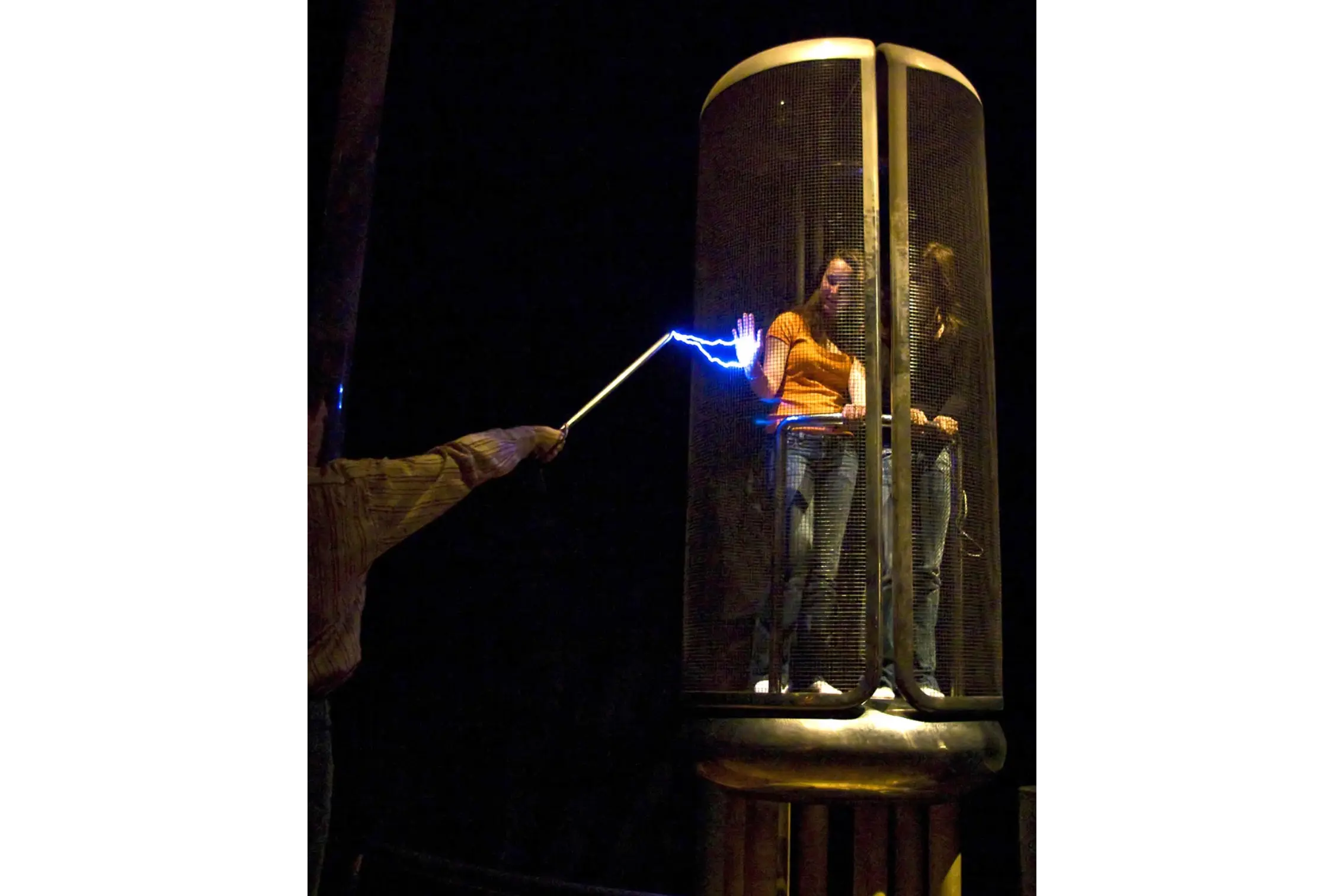
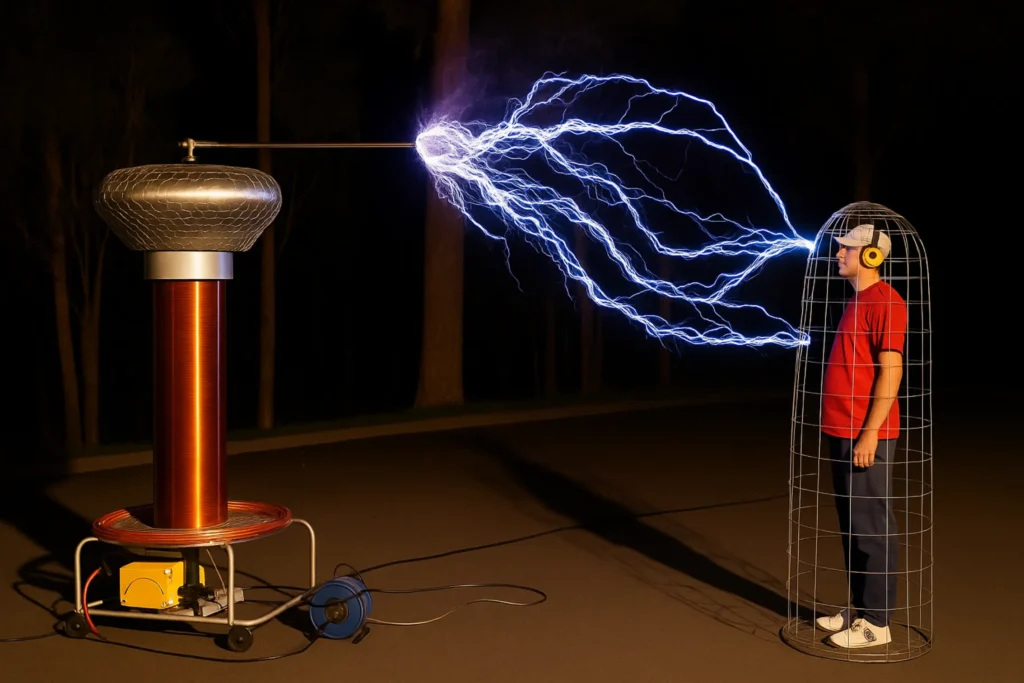
Faraday cage is, well, a cage made usually out of metal (or other conducting material), meant to block electric and electromagnetic waves and radiation.
It can take different shapes, from a literal cage used for tricks, as in the picture provided, to a much smaller, wallet version meant to protect your credit cards from identity theft.
Michael Faraday
Who was he?
Let’s start from the beginning – who was Michael Faraday and what did he do to have the Faraday cage named after him?
Michael Faraday was an English physicist and chemist mainly recognized for his contributions to electromagnetism. He established the concept of electromagnetic fields and the laws of electrolysis. He’s often referred to as one of the most influential scientists in history.
In 1836, during his research on static electricity (an ice pail experiment, to be exact), Faraday noticed something odd—the electrical charge put on a conductor resides only on the exterior and has no influence on the interior.
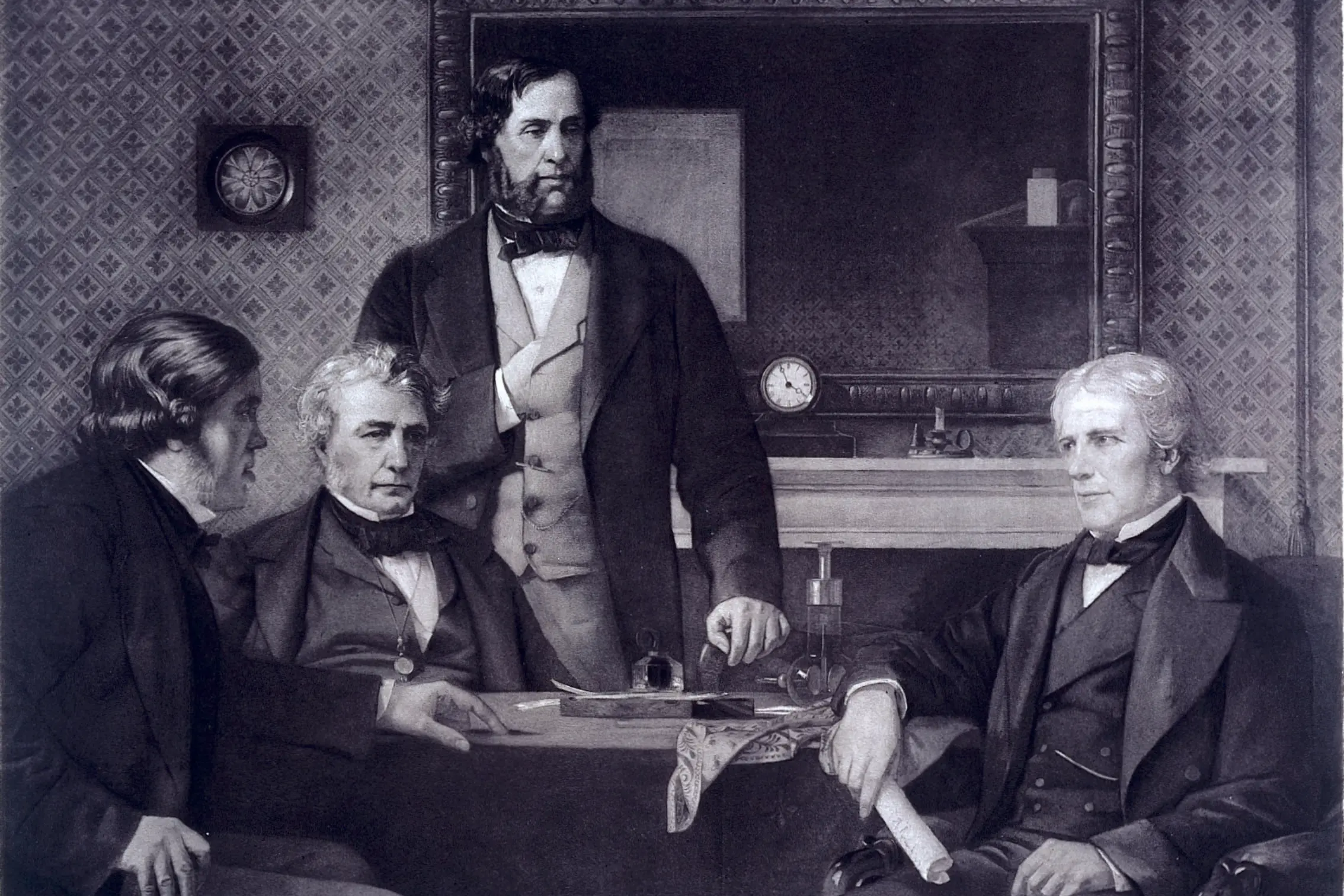
To emulate this phenomenon again, Faraday built a metal foil-lined room and put an electroscope (a device meant to detect electric charges) inside. When he allowed high-voltage discharges to strike the outside of the room, the device didn’t pick up anything—as if the electric charges weren’t there.
How does the Faraday cage work?
Technical Foundations of Electromagnetic Science
To explain the phenomenon, we first have to understand the physics of electricity and the behavior of conductors.
To put it in simple terms, most materials are striving to stay electrically neutral (have the same amount of protons (+) and electrons (-)).
An electric strike is a current made up of moving electrons. Once it hits a material, the electrons are transferred onto it, creating an imbalance.
The reaction we get depends on the type of material itself:
- If it’s an insulator (like rubber, wood, or plastic), the electric charge accumulates in the ‘struck’ spot and builds up energy that causes the material to heat up, burn, or even explode.
- If it’s a conductor (like metal), its unique built allows the charge to move in order to relieve the energy from the struck spot and spread it evenly on the outer surface, or release it, if the metal is connected to the ground.

That’s why a tree struck by lightning burns or splits apart, while the lightning rod on a building carries the electric discharge to the ground without consequences to people inside.
But why doesn’t the movement of the electrons reach the inside? The extra electrons gather on the outside, closest to the source, and their electric fields overlap in such a way that they cancel each other out. This causes the electric field within the material to drop to zero, leaving the inside completely unaffected.
Try listening to this guy – The Alchemist. His explanation is simple and straight to the point.
Why it matters?
Safety

This is pretty obvious, but electricity isn’t good for you. Getting in contact with it without protection can cause serious harm, or even death. To protect you, Faraday cages come to play.
Take the most dramatic of an example – a lightning strike. As showed before with the tree, insulators that come in contact with a massive electric discharge can get destroyed by the sheer amount of energy it carries. You can only imagine what it can do to your body – in best scenarios you’ll end up with severe skin damage (in a form of Lichtenberg figures), in worst – cardiac or respiratory arrest (since the electrical charge severes the brainstem and other parts of the nervous system).
That’s where the Faraday cage found it’s immediate use – if you’re inside, the lightning can’t reach you. It’s thanks to not only the lightning rods present in buildings (especially when we’re talking about constructions that can’t have it, like planes), but also to the construction itself, that resembles a Faraday cage.
Data Protection
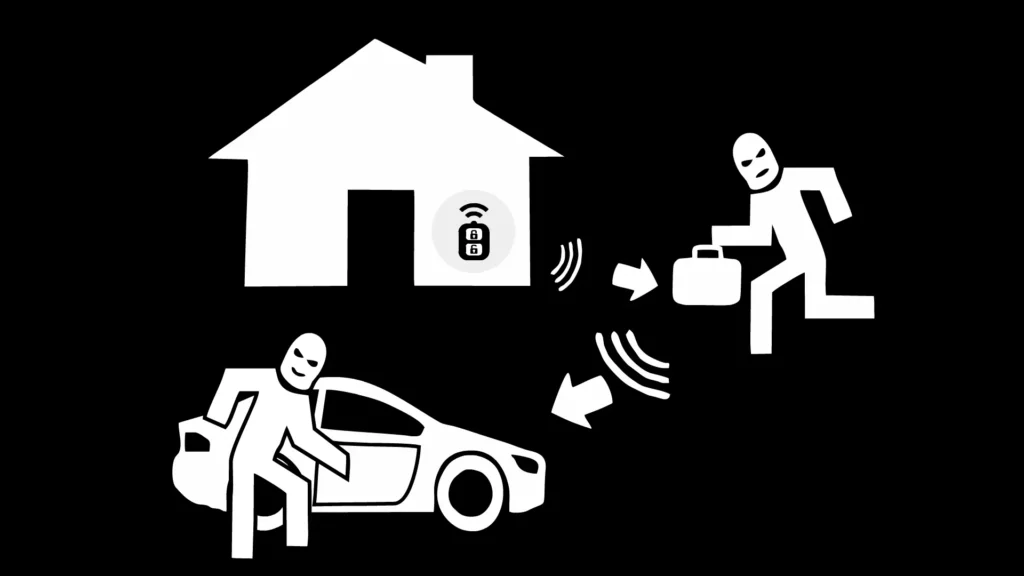
Physical safety isn’t the only thing that Faraday cage can prove useful. In modern world, electromagnetic waves surround us on daily basis, carrying all sorts of information – including those that you don’t quite want to share. Contactless payments, Bluetooth, Wi-Fi networks, and even keyless car entry systems – all of those technologies were created purely for convenience, but they also created new opportunities for theft and exploitation.
RFID skimming in one of them. Criminals use portable scanners to capture and read data stored on credit and debit cards, passports, and even keycards. Just standing in a crowded bus or in a line can be enough for them to quickly scan the information, and later copy and use them.
Another method of theft, commonly used with car with keyless entry system, is the relay attack. In this case, thief has to only extend the signal from the keyfob inside the house, to unlock the car. In a matter of seconds, he can drive away as if the car was his – no forced open, no damage.
The Faraday cage also finds its application here – since those information travel via electromagnetic waves, it can also block them – finding it’s use in wallets, passport covers and pouches. It’s even applied to a larger scale in corporate and government facilities, where even some rooms are shielded with Faraday cage to protect computers and phones.
Faraday Cage application
Now that we know what Faraday’s cage is and how it works, it’s time to move on to the practicalities. What is Faraday’s cage used for?
Physical safety
As mentioned before, the first discovered use of Faraday’s cage is protection against the electric charges, so protection against possible electricution was the first logical utilisation.
Microwave ovens

Have you ever wondered why the glass window of a microwave oven has this little mesh pattern over it? It’s a built-in Faraday’s cage. The mesh holes are much smaller than the wavelength (about 12 cm) of the microwaves inside, effectively stopping them from flowing through. That keeps the radiation trapped inside, cooking only your food — not you.
The mesh and metal box keep you safe while still allowing you to witness your meal heat up. Without this shield or its other elements, microwaves could leak out and interfere with Wi-Fi and Bluetooth, or even hurt you, and that’s why each oven is constructed to function as a Faraday cage.
Airplanes

We’re not talking about the “Please put your phone in airplane mode” mantra that is meant to ensure communication between the pilot and Air Traffic Control. The whole metal structure of the airplane is designed so that an eventual lightning strike doesn’t harm the passengers inside—the charge flows damage-free, dissipating along the fuselage.
Cars

Similarly to airplanes, cars are also designed to keep you safe while driving. Since they are connected directly to the ground, the electrical charge, instead of flowing around the exterior of the car, goes straight to the ground, keeping you and your passengers harm-free.
Research
Wifi, radio, bluetooth – those are just a few examples of electromagnetic waves that surround us on everyday basis. It’s convenient and useful, sure, but there are also downsides – this electromagnetic overload can disrupt important research that – a shocker – also utilizes electromagnetic mechanics. To prevent that, Faraday cages have been scaled up to a room size.
MRI rooms in hospitals

Magnetic Resonance Imaging (MRI) machines are extremely sensitive to outside interference. Even slight radio waves from phones or nearby electronics could blur the scan and render it useless.
To prevent this, entire MRI rooms are built into giant Faraday cages, lined with copper or aluminum. Such shielding ensures that the images doctors use for diagnosis are sharp, accurate, and free of distortions.
Electronics testing labs
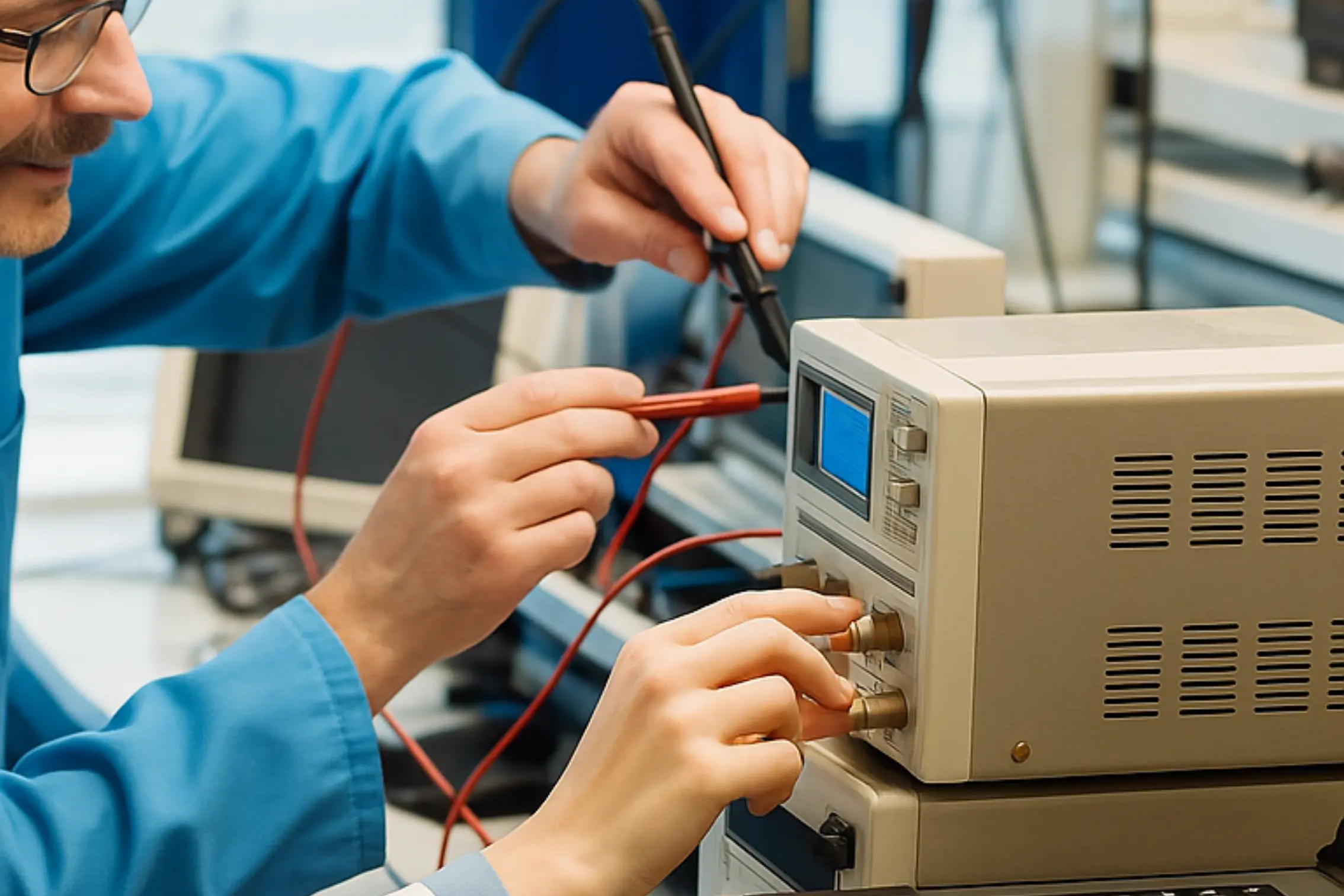
Scientists and engineers often have to test newly developed technology in an environment, that’s free from background waves such as Wi-Fi, cell towers, and radio. To make this happen, specialized laboratories are constructed as Faraday cages.
The shielded areas allow researchers to test different devices, measure their electromagnetic compatibility (EMC), or create new technology free of outside interference.
Data safety
Now we’re getting to the most interesting use – one that probably made you interested in this topic in the first place. Electromagnetic waves are able to transfer data without you knowing a thing; Contactless payment, Bluetooth – these are just a two examples of how your personal information can be stolen without you even noticing. Thankfully, there are measures to prevent that.
Faraday bags and pouches

Portable Faraday cages are designed to block all wireless signals, successfully isolating all electronics – whether it’s a laptop, phone or other device – from receiving or sharing any sensitive information.
Used by security guards, police and military officers, they quickly spread to everyday use, especially in the corporate world, where sensitive information such as strategies, customer data and access codes are often carried around by employees on their devices.
Faraday wallets and passport covers

Regular people are also increasingly aware of the dangers of potential data theft. This rising awareness is a direct reason for why RFID-blocking wallets and passport covers entered stores worldwide. They are covered with conductive material that prevents scanners from wirelessly stealing credit card infromation or personal details, securing the user from possible identity theft.
This technology has also been adapted to protect cars from relay attacks – thieves extend the keyless entry signal from the keyfob to the car. See more on car safety here.
The affordable price of that type of wallet has to be taken with a grain of salt – if you’re thinking about getting one, make sure to check exactly how the insulation is constructed (more on that right below)
Shortcomings and myths about Faraday cage
Is Faraday cage useful?
Faraday’s cages may be an ideal shield – but they have their limits. They can block electric fields and electromagnetic waves quite well, but their effectiveness heavily relies on their build.
For instance, the material must be conductive, the surface needs to be continuous, and the openings must be smaller than the wavelength of the signal you want to block. If there are significant gaps, poorly connected joints, or thin spots, electromagnetic waves can leak through. This is why you often can still get a weak phone signal inside an elevator or car—the ‘cage’ isn’t completely sealed.
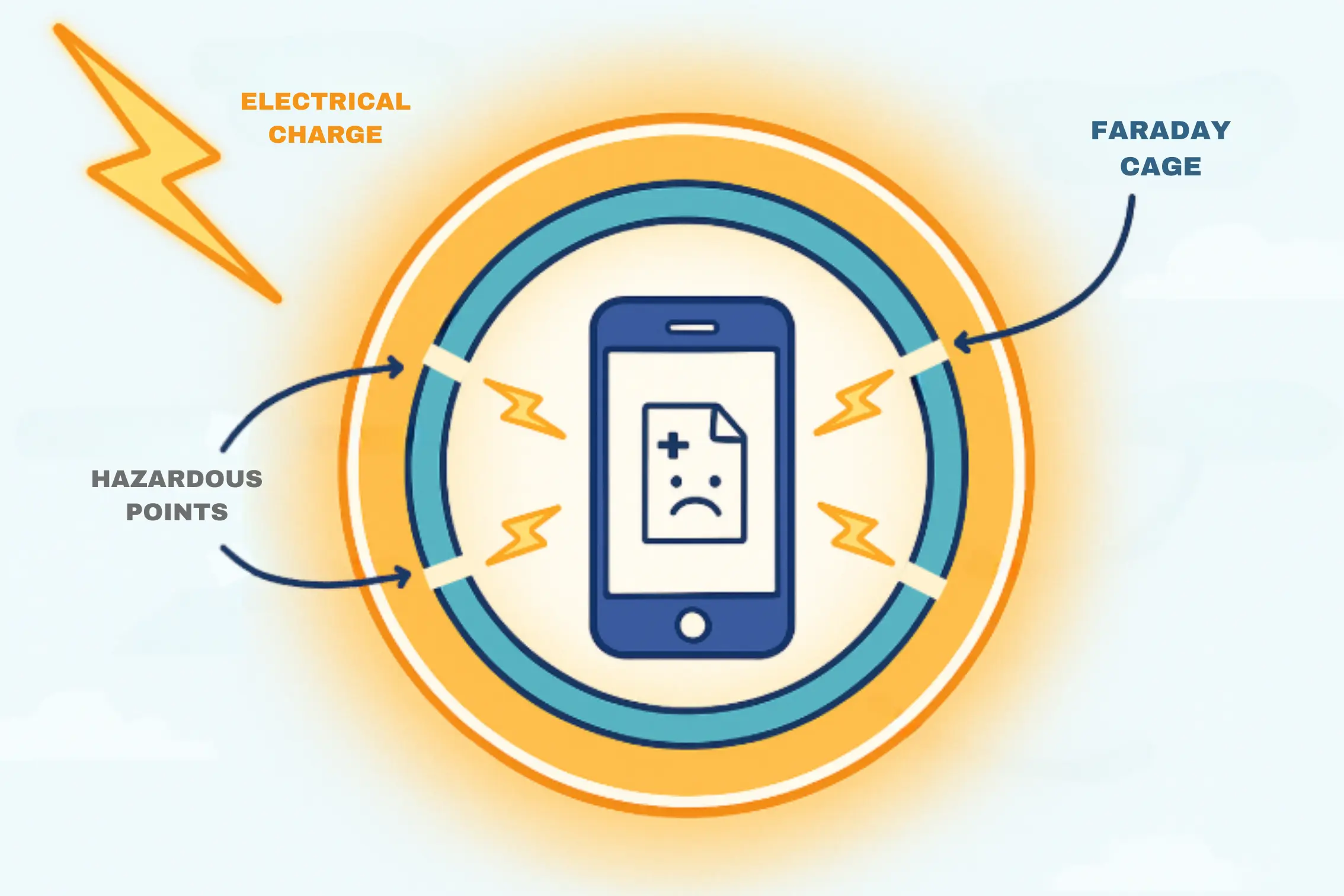
Another important point is that Faraday cages don’t block all types of energy. They work well against high-frequency waves like radio, Wi-Fi, or microwaves, but they are much less effective against very low-frequency magnetic fields, such as Earth’s natural magnetic field. So if you step inside one, you won’t lose your compass reading. Similarly, they can’t shield against forces like gravity (which is a very common misconception).
There are also myths about everyday objects. For example, some people believe wrapping your phone in foil will always block the signal. In practice, signals can still leak in or out if the foil isn’t wrapped tightly enough or has even micro gaps. Likewise, cheap RFID wallets sometimes use only a thin strip of metal that doesn’t cover the whole surface, giving a false sense of security.
In short, a properly designed Faraday cage is exceptionally effective but not as foolproof as you’d think. Its performance is based on construction quality, input frequencies, and enclosure sealing.
Do it yourself – Faraday cage
Making a Faraday cage is easier than you think – it takes a couple minutes, and might save you a lot of time and money in identity theft prevention or relay attacks.
Let’s get started
What you’ll need
- Aluminum foil
- Paper envelope or a plastic zip bag (or any insulated container that will work as an insulator)
- Tape (preferably conductive, but a normal one will work)
- Test device – mobile phone is the easiest and most accessible to test
Step 1 – Preparation

Does the phone have a connection? Check it by calling your phone or connecting with it via bluetooth.
Step 2 – Inner sleeve

Put the device in a paper envelope or thin plastic bag and close it, with no openings that will poke through the foil. This prevents sharp corners from tearing the foil and keeps metal from touching ports/buttons.
Step 3 — First foil wrap

Tear off a sheet of foil large enough to cover the device fully with overlap on all sides. Place the sleeved device in the center and fold the foil over like a present, making sure that there are no gaps (we recommend pinching all the edges for that). Feel free to use a conductive tape to ensure lack of gaps.
Step 4 — Second and third layers

Add a second foil layer, but rotate the package 90° before wrapping so the new seams land in different places.
Repeat as many times as you’d like – 3 layers are the bare minimum, but the more you add, the safer the Faraday Cage will be.
Step 5 — Test the cage
Try a few independent tests (some are easier to block than others):
- Phone call / SMS: Call the phone. It should not ring.
- Bluetooth: See if your earbuds can reconnect.
- NFC/RFID (cards, key fobs): Try tapping it
If any test still works, go to troubleshooting.
Troubleshooting
- Check seams and corners – These are usually the places where leaks occur. Add small foil patches and press flat, or use conductive tape to seal the holes.
- The foil is too loose. – airy wraps create tiny tunnels through which electric waves can pass. Try rewrapping, this time tighter.
- Device still connecting? – Some newer models are programmed to increase the transmitting power in order to connect with something – anything. Try putting it in an Airplane Mode, wait 10–20 seconds, then turn off Airplane Mode and retest.
Conclusion
Is it all worth it?
Faraday cage concept may be nearly 200 years old; however, its significance has only expanded with time. Today’s world is full of electronics, wireless signals, and constant data streams, and protecting yourself from undesirable electrical disturbances has never been more essential. From keeping you safe in the cabin of an airplane struck by lightning or protecting your bank cards from digital theft, Faraday‘s discovery is quietly taking place all around us.
Its importance lies in one thing: keeping the interior safe, no matter what’s occurring outside. That principle safeguards people, protects information, and preserves the trustworthiness of current technology. Faraday’s cage is not merely a clever scientific experiment; it is a basic element of security and safety in our world.